
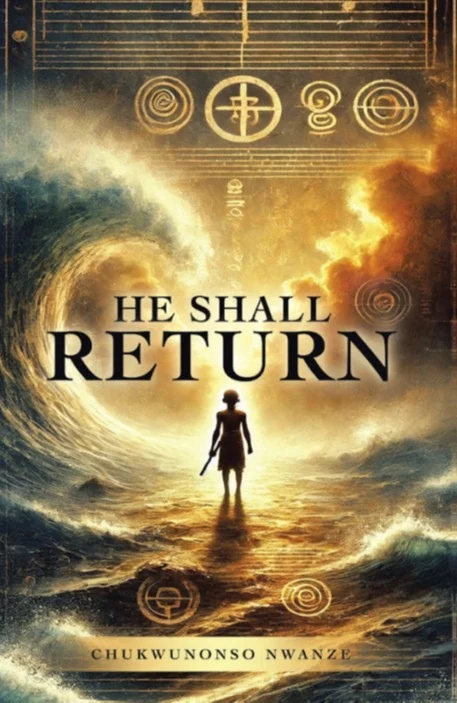
Excerpt from He Shall Return:
Time bore on, and the young boy who once had trembled in the belly of a slave ship became the man who stopped planning escapes. When the others were broken and lay in the dirt, whispering of home, George’s role changed. He became like the older folk who had shaken their heads at his refusal to respond to the name George. He comforted the broken slaves with his flute and with barely remembered Igbo proverbs, forcing his tongue to do some exercise to form the words:
Akụkụ nke chọrọ ịghọ nkwụ ga-esi n’ọkụ gafee (A palm nut that wants to become palm oil must pass through fire).

The title, He Shall Return, carries a promise. It’s a promise whispered in memory. It’s also a promise of healing: that no matter how far history displaces us, the spirit of return — to community, to self, to wholeness — is always possible.
Introduction: Why Stories Matter Now More Than Ever
West African culture is hinged on storytelling and proverbs (or principles). Proverbs are the vehicles used to drive the morals of stories home. The Igbo word for proverbs (or principles) is Ilu. Afamefuna used proverbs to recenter himself, to hold on to himself, to retain connection to his past.
Every story we tell is also a story we inherit. When I began writing He Shall Return, I wasn’t just building characters on a page — I was piecing together fragments of oral history, written history, memory, and longing. I was reaching back into the silences of precolonial Africa, the ruptures of the transatlantic slave trade, and the ways the African diaspora has carried both wounds and beauty across centuries.
For me, this book was never only about creating a novel. It was about confronting beauty and ugliness. It was about paradoxes. It was about healing. It was about listening. It was about reclaiming.
In this first blog post for my author website, I want to take you behind the scenes of He Shall Return — to share how African storytelling, American music, pre-colonial Igbo science and the lived experiences of the diaspora inspired this work. I’ll also share how these same themes continue to shape my future projects, my broader wellness philosophy, and this community we’re building together.
If you’re new here, welcome. This space is for readers, dreamers, seekers, and anyone longing to rediscover the original promise of what humanity means, so we might walk more courageously into where we’re going.
Want exclusive excerpts, giveaways, and deep dives into the world of my books? Join the inner circle

The Birth of He Shall Return
I can tell you many stories on how the inspiration for He Shall Return came to me, but if I am to be candid, the seed of this novel was planted in me when I was a young girl, pondering why the second most populous Black nation was Brazil. This seed germinated into a seedling of questioning that followed me: What happens when displacement becomes not just a historical event but a wound passed down through generations?
I wanted to imagine the life of Afamefuna, a boy, torn from his homeland during the transatlantic slave trade, and follow his iterations (or echoes if you will) across centuries until they reach Alexander, his modern-day descendant in America. Through their parallel journeys, I wanted to illuminate both the pain and resilience of the African story — a story that is simultaneously particular and universal.
The title, He Shall Return, carries a promise. It’s a promise whispered in memory. It’s also a promise of healing: that no matter how far history displaces us, the spirit of return — to community, to self, to wholeness — is always possible.
Precolonial Africa: A World Too Often Silenced
When we talk about Africa in mainstream Western narratives, we often begin the story with colonization or slavery. But that is not where the story begins.
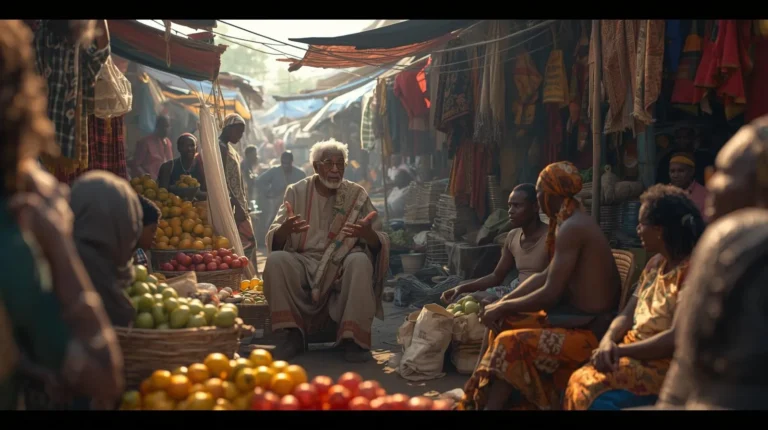
Precolonial Africa was a world of empires, kingdoms, intricate trade systems, complex philosophies, and vibrant science. The Igbo people — central to He Shall Return — understood life through the lens of community, spirituality, and balance with the natural world.
Some of the key ideas I wove into the novel include:
- The Market of Life: In Igbo cosmology, the universe is often likened to a market. We come into this life to transact — to fulfill our purpose, to learn, to contribute, and then, like market-goers, we return home. This philosophy became a structural metaphor in my novel.
- Ala: In Igbo science, Ala ensures balance in the world. Her presence hovers over Afamefuna’s story, reminding us that exile from the land is not merely physical but spiritual.
- Chi: In Igbo thought, everyone has a chi, a guiding lifeforce that attempts to guide one towards destiny. The conflict between human will, ancestral memory, and chi plays a central role in both Afamefuna’s and Alexander’s lives.
By foregrounding these philosophies, I wanted readers — especially those in the African diaspora — to glimpse the richness of the worlds that existed before metonymic chains. I use the metaphor metonymic deliberately because I wanted to use He Shall Return as a channel to convey the interconnectedness of oppression, slavery, incarceration and broader themes of colonialism and exploitation.

The African Diaspora: Wounds and Wonders
The transatlantic slave trade was not only about bodies transported across oceans — it was about memories, languages, and science being disrupted. Yet, even amidst rupture, fragments survived.
- In Music: African rhythms gave rise to blues, gospel, jazz, and hip-hop. In He Shall Return, the oja (Igbo flute) becomes a bridge across time, reminding Alexander of the songs his ancestors carried.
- In Faith: Enslaved Africans carried cosmological concepts that blended with Christianity in the Americas, creating spiritual practices that were both subversive and healing.
- In Identity: Diasporic communities preserved proverbs, stories, and rituals that spoke to resilience, even when direct lineage to specific homelands was obscured.
In the novel, Alexander’s journey mirrors this diasporic reality. He struggles with fragmented identity, but in retracing his ancestral path, he finds strength, love, and a sense of homecoming.
Writing Between Two Worlds
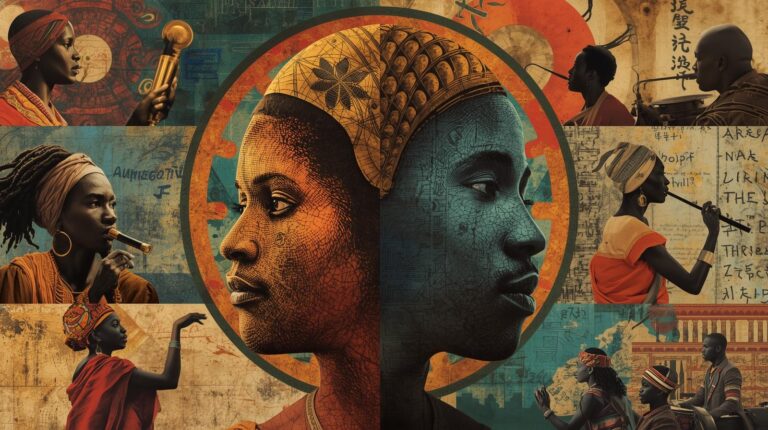
As an author, I had to balance two worlds while writing He Shall Return:
- The world of precolonial Africa — alive with science, language, and music.
- The modern world of the African American diaspora — marked by resilience, creativity, and a yearning for reconnection.
This tension mirrors my own creative philosophy: storytelling is not just about entertainment; it is about survival. It is about stitching back together what history tried to tear apart.
In many ways, He Shall Return is less about linear time and more about cyclical memory. Afamefuna’s exile and Alexander’s return are not opposites but echoes of the same truth: the past is never past.

Return Is Not a Place
Return is not always a passport stamp or a boarding gate.
It is not the soil beneath your feet, but the rhythm in your chest when a song reminds you of a grandmother’s kitchen or a cousin’s laughter echoing through humid summer nights.
For the diaspora, return is a remembering.
A re-threading of stories unraveled by migration, by survival, by silence.
It is the quiet rebellion of naming your child after an ancestor whose name was once deemed too difficult, too foreign, too much.
Return is the way your body moves to a beat it was never taught but somehow knows.
It’s the spice you add without measuring, the proverb you quote without translation, the ache you feel when a place you’ve never been calls you home.
.
It is reclamation.
Of joy. Of language. Of lineage.
It is choosing to see yourself not as scattered, but as seeded—planted in many soils, blooming in many tongues.
Return is not a reversal.
It is a reckoning.
A gathering of selves across time zones and generations,
a sacred reunion of what was, what is, and what can be.
So no, return is not always physical.
Sometimes, it’s a poem.
Sometimes, it’s a dance.
Sometimes, it’s the way you love your people loudly,
without apology.
What This Means for Readers Today
You don’t have to be African or African American to resonate with the themes of He Shall Return. Displacement, longing, love, and homecoming are universal human experiences.
But for those within the African diaspora, this story offers something even deeper:
- A reminder of the cosmologies that preceded slavery and colonialism.
- A bridge between fractured histories and living memory.
- A call to return — whether that means returning to Africa, to community, or to the self you thought you lost.
Want to keep exploring these themes with me? Join the inner circle for exclusive blog updates, giveaways, and early access to my next projects.
Building Beyond the Book: Future Projects
While He Shall Return is my debut, it is only the beginning. I see my writing as part of a larger tapestry — one that weaves together:
- Future novels that will continue exploring global narratives of migration, memory, and identity.
- Wellness inspired by African natural healing traditions, because caring for the body is also a form of storytelling.
- This blog and community where readers can gather not only to discuss books but also to engage with ancestral wisdom, wellness practices, and cultural creativity.
This website is not just an author platform — it is a meeting ground, a digital “marketplace” in the Igbo sense: a place where we come together to exchange, learn, and return home enriched.

A Gift for You
To celebrate the launch of this blog and my debut novel, I want to invite you to join my newsletter community. Subscribers will receive:
- An exclusive prequel from the world of He Shall Return
- An exclusive sneak peek chapter of He Shall Return.
- Early invitations to prize giveaways (including signed copies of the novel).
- Special content on diaspora stories, and wellness rituals.
- Behind-the-scenes updates on my next books and projects.
Join the inner circle to be part of that journey.

Closing: He Shall Return — and So Shall We
At its heart, He Shall Return is more than a novel. It is a testimony to the resilience of memory, the persistence of love, and the unbroken thread that connects us across oceans and centuries.
In every exile, there is the whisper of return. In every wound, the possibility of healing.
Thank you for joining me at the beginning of this journey. I cannot wait to share more stories, more histories, and more healing with you in the weeks to come.
Reflection ilu: A good name is greater than money: Ezi afa ka ego